
Pigeon Problems in Pickering Condos: What Waterfront and High-Rise Residents Need to Know

Pickering is changing fast. What was once a quieter bedroom community on the eastern edge of the GTA has become one of the region’s most active condo development corridors. The stretch along Kingston Road between Pickering Town Centre and the waterfront, together with the emerging high-rise developments near Frenchman’s Bay and the Pickering GO Station, has added thousands of new condo units to the local housing market in recent years.
With that growth comes a problem that new condo residents in Pickering are increasingly encountering: pigeons. For a city that sits at the intersection of a major lake Ontario waterfront, two significant creek systems, and a rapidly densifying urban core, the conditions for pigeon activity are as strong here as anywhere in Durham Region. This article explains why Pickering’s specific geography makes condo balconies a target, what residents are actually dealing with, and what works to solve it.
Pickering’s Growth and the Pigeon Connection
The relationship between urban densification and pigeon population growth is well established. Pigeons thrive in environments that combine elevated structures, consistent food availability, and proximity to water. Pickering’s recent development pattern delivers all three simultaneously.
The condo towers rising along Kingston Road and near the Pickering Town Centre provide the elevated nesting and roosting structures that pigeons seek. The commercial activity along that same corridor, including the restaurants, food courts, and retail plazas around the mall and along Liverpool Road, supplies a consistent food source within easy flight distance of the new residential towers. And the waterfront, including Frenchman’s Bay, the Duffins Creek mouth, and the Lake Ontario shoreline at Pickering Beach Road, creates a natural movement corridor that channels pigeons directly into the residential zones above.
Residents in newer condo buildings along the Kingston Road corridor who assumed pigeon problems were a downtown Toronto issue are finding that the same dynamics apply in Pickering. The birds do not recognize municipal boundaries. They follow food, water, shelter, and elevation, and Pickering’s current development pattern delivers all of these within a compact geographic area.
The Role of Frenchman’s Bay and the Waterfront
Frenchman’s Bay is one of Pickering’s most distinctive geographic features, and it plays a direct role in the local pigeon situation. The bay and the surrounding parkland at Frenchman’s Bay West Park and Beachfront Park create a natural habitat corridor that supports a year-round bird population along the lakeshore. Pigeons that nest and roost in the natural areas around the bay move regularly into the adjacent residential zones, particularly the condo buildings and townhouse complexes within a few blocks of the waterfront.
The Duffins Creek trail system, which runs northward from the Lake Ontario shoreline through the heart of Pickering, functions as a movement corridor for birds between the waterfront and the higher-density residential and commercial zones near the 401 and Kingston Road. Condo residents along or near this corridor report consistent pigeon activity on south and west-facing balconies, where the birds rest during daily movements between feeding areas and roosting sites.
This waterfront dynamic is specific to Pickering and distinguishes it from inland GTA communities, where pigeon pressure comes primarily from commercial food sources rather than natural habitat corridors. For residents near the bay and the lakeshore, the pigeon problem has a seasonal rhythm that intensifies in spring and early summer during breeding season, when birds actively seek elevated nesting sites on nearby structures.
What Pickering Condo Residents Are Actually Experiencing
Based on the calls Pigeon Control Toronto receives from Pickering residents, the pattern is consistent. A condo owner in a newer building along Kingston Road or near the Pickering GO Station notices one or two pigeons landing on the balcony railing in late winter or early spring. Within a few weeks, the visits become daily. By April or May, nesting materials appear. By summer, the balcony is unusable.

The Nesting Timeline in Pickering
Pickering’s proximity to Lake Ontario moderates its climate slightly compared to communities further inland, but the city still experiences the full Toronto-area breeding cycle. Pigeons in the Pickering area typically begin evaluating potential nesting sites in February and March, when daytime temperatures begin to rise. South-facing balconies on mid-rise and high-rise buildings, which are common in the newer developments near Pickering Town Centre, warm up earlier than other surfaces and attract early-season scouting activity.
By April, active nesting is underway on balconies where access has not been blocked. Eggs are laid in clutches of two, and incubation takes approximately eighteen days. A pair of pigeons can complete two to four breeding cycles between April and October in the Pickering area, meaning a single nesting pair that establishes itself on a balcony in spring can produce multiple clutches before the end of the season. Each successful breeding cycle reinforces the birds’ attachment to the site and increases the difficulty of dislodging them.
Why Newer Buildings Are Not Protected
A common assumption among residents of Pickering’s newer condo developments is that recently constructed buildings are less vulnerable to pigeon problems than older structures. This is not accurate. New construction actually creates ideal conditions for early pigeon colonization because the buildings lack the weathering and surface irregularities that deter birds from some older structures. Ledges and balcony surfaces on new buildings are smooth and clean, which pigeons prefer, and construction activity in adjacent lots disturbs existing pigeon colonies, pushing birds to seek alternative nesting sites in nearby completed buildings.
Several condo towers near Pickering Town Centre and along the Kingston Road development corridor have reported pigeon activity within the first year or two of occupancy. Early intervention before colonies establish is significantly more effective and less costly than remediation after nesting patterns are embedded.
Solutions That Work for Pickering Condo Balconies
Pigeon Control Toronto serves condo residents across Pickering with the same professional installations used throughout the Greater Toronto Area. The following solutions are appropriate for the balcony types and building configurations common to Pickering’s condo stock.
Professional Pigeon Netting
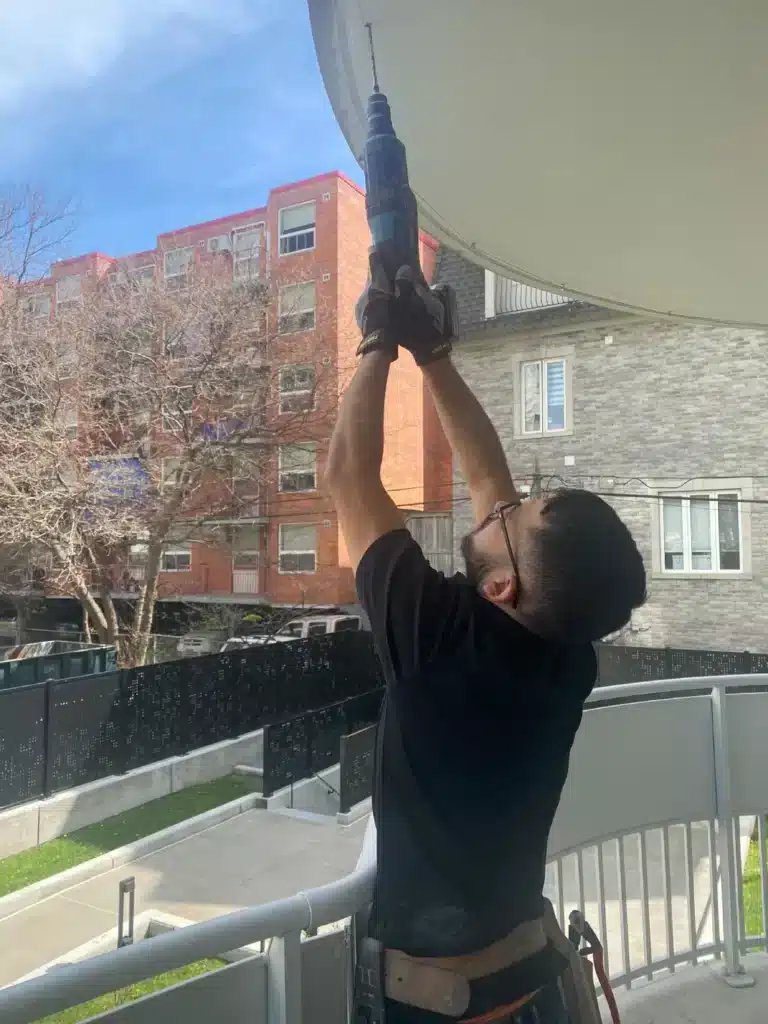
Professional netting installation remains the most effective long-term solution for condo balconies in Pickering. A properly installed net covers the full balcony opening with no gaps, eliminating access entirely. For buildings near Frenchman’s Bay and the waterfront where pigeon pressure is consistent and seasonal, netting is the only solution that provides reliable year-round protection without requiring repeated intervention.
Balcony Netting for Pickering Condos
Our condo balcony netting service is available across Pickering and all Durham Region communities. We work with individual unit owners and coordinate with condo boards and property managers for building-wide installations. For residents in Pickering’s newer towers, where condo corporations are still developing their maintenance policies, we provide full documentation to support approval applications.
Bird Spikes for Railings and Ledges
For balcony railings, parapet ledges, and roofline surfaces where pigeons land before accessing nesting areas, anti-roosting spike systems are a practical and durable option. Stainless steel spike systems are rated for outdoor conditions in the Durham Region climate and provide targeted protection on the specific surfaces where pigeons concentrate.
Balcony Cleaning Before Installation
If pigeons have already been active on your Pickering balcony, professional cleaning is a required first step before any bird control installation. Our pigeon dropping removal service safely removes droppings, nesting materials, and biological waste using commercial-grade disinfectants and appropriate protective equipment. Removing existing scent markers reduces the likelihood of pigeons returning to the treated area after exclusion systems are installed.
Serving Pickering and Durham Region
Pigeon Control Toronto provides professional bird control services across Pickering and the surrounding Durham Region communities. For more information about our services in your area, visit our dedicated our Pickering service page. We also serve bird control services in Ajax, pigeon control coverage in Oshawa, and communities across the eastern and western GTA.
Frequently Asked Questions
These are the questions Pickering condo residents ask us most often.
Q1. Is pigeon activity in Pickering really bad enough to need professional help?
Yes, and the problem is growing alongside the city’s development. Pickering’s combination of waterfront geography, expanding condo stock, and proximity to natural bird corridors along Duffins Creek and Frenchman’s Bay creates conditions for persistent pigeon activity that does not resolve on its own. Residents who address the problem early with professional exclusion avoid the more significant costs and disruption associated with established colonies. Pigeon Control Toronto offers free on-site assessments so you can get an honest evaluation of your specific situation before committing to any service.
Q2. My building is only a few years old. Why are pigeons already a problem?
New construction in areas like the Kingston Road corridor and near Pickering Town Centre is particularly attractive to pigeons during the early years of occupancy. Clean surfaces, undisturbed ledges, and the displacement of birds from adjacent construction sites all contribute to the rapid colonization of newer buildings. The assumption that new buildings are naturally protected is one of the most common misconceptions we encounter from Pickering residents. Early intervention is both more effective and less costly than waiting until a colony is established.
Q3. Do I need my condo board’s permission to install netting in Pickering?
In most cases, yes. Condo corporations in Pickering, as throughout Ontario, typically require board approval for exterior modifications to individual units. Pigeon Control Toronto provides full documentation for your approval submission, including installation specifications, material details, and proof of insurance. We have experience working with condo boards across Durham Region and can help you prepare everything needed to move the process forward efficiently.
Q4. How does Pickering’s proximity to the waterfront affect my pigeon problem?
The Lake Ontario waterfront and Frenchman’s Bay create a natural habitat corridor that supports a consistent year-round pigeon population in the area. Birds that nest and feed near the waterfront use the condo buildings along Kingston Road and the surrounding residential zones as elevated roosting and nesting sites during their daily movements. This means that pigeon pressure in waterfront-adjacent buildings in Pickering is more persistent than in purely inland communities, and that temporary deterrents are particularly ineffective because the birds have strong geographic reasons to return to the area repeatedly.
Q5. How much does pigeon netting cost for a condo balcony in Pickering?
A standard single-balcony netting installation in Pickering typically ranges from $400 to $900 CAD, depending on balcony size and access requirements. Pigeon Control Toronto provides free on-site assessments and written quotes with no obligation. For buildings requiring multiple unit installations, volume pricing is available. Contact us for an accurate quote based on your specific property and balcony configuration.
Ready to Protect Your Pickering Balcony?
Pigeon Control Toronto serves condo residents across Pickering, Ajax, Oshawa, and the full Greater Toronto Area. Whether you are dealing with early-season scouting activity or an established nesting situation, our team provides honest assessments and professional installations that solve the problem for good.
Request a free assessment at your Pickering property.