
Can Birds Get Stuck in Bird Netting?

The short answer is yes, but it’s rare and completely preventable.
If you’re considering bird netting for your balcony or property, this question probably worries you. You want to solve your pigeon problem without harming birds. So it’s natural to wonder: what if a bird gets tangled in the netting?
The truth is more nuanced. Modern bird netting is designed with safety in mind. The real risk comes from improper installation or using the wrong type of netting. Understanding how netting works and what to avoid ensures your solution protects your property while being safe for birds.
How Modern Bird Netting is Designed
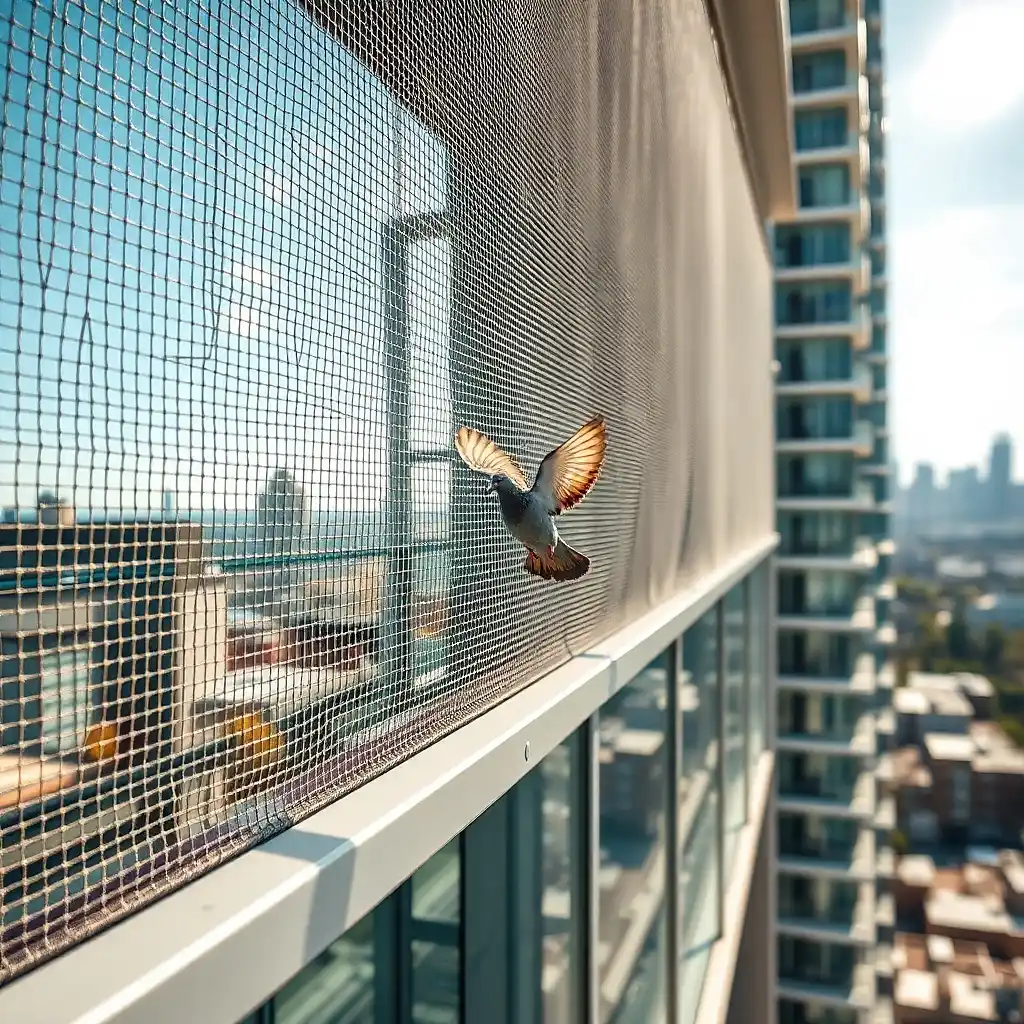
Quality bird netting isn’t meant to trap birds. The mesh is specifically engineered to exclude without harming.
Professional-grade netting has these characteristics:
- Mesh size (typically 3/8 inch to 1/2 inch) prevents birds from passing through
- Soft, flexible material that won’t cause cuts or injuries
- Proper tension so birds can’t force through or get caught
- No sharp edges or attachment points
- Installation prevents birds from finding gaps
When installed correctly, birds encounter the netting, realize they can’t pass through, and relocate elsewhere. They don’t become trapped.
Where Problems Actually Occur
Bird entanglement happens, but almost always due to improper installation rather than the netting itself.
Common installation mistakes:
- Loose netting that sags and creates pockets
- Inadequate fastening that allows movement
- Gaps between netting sections
- Netting installed too close to structures
- Using consumer-grade materials instead of professional products
Loose netting with wrinkles and sags creates spaces where birds can get caught. Proper installation eliminates these hazards entirely.
Poor installation examples:
- Netting strung across balconies without proper tension
- DIY setups using garden netting or fishing line
- Incomplete coverage with accessible gaps
- Hardware cloth mixed with regular netting
- Fasteners that protrude and catch feathers
These failures aren’t reflections on netting as a solution. They’re failures of improper installation.
Why Professional Installation Matters
Professional protective barrier systems eliminate entanglement risks because experts know:
- Proper mesh sizes for different bird species
- Tension requirements for safety and effectiveness
- Installation techniques that prevent gaps and sags
- Materials that meet safety standards
- Inspection procedures to verify safety
Professionals use high-quality materials designed for outdoor durability. These aren’t the same products available at hardware stores. Professional-grade exclusion systems resist UV degradation, maintain proper tension in weather, and don’t develop dangerous sags.
Installation includes complete coverage with no accessible gaps. Birds can’t access the netting because they can’t reach it. The barrier is positioned so birds encounter solid protection before getting close to netting.
Proper fastening means the netting can’t loosen or shift. Everything is secured at multiple points using appropriate hardware. Quality installations include warranties guaranteeing safety and effectiveness.
When Birds Might Encounter Netting Safely
Most birds that encounter properly installed netting experience no problems.
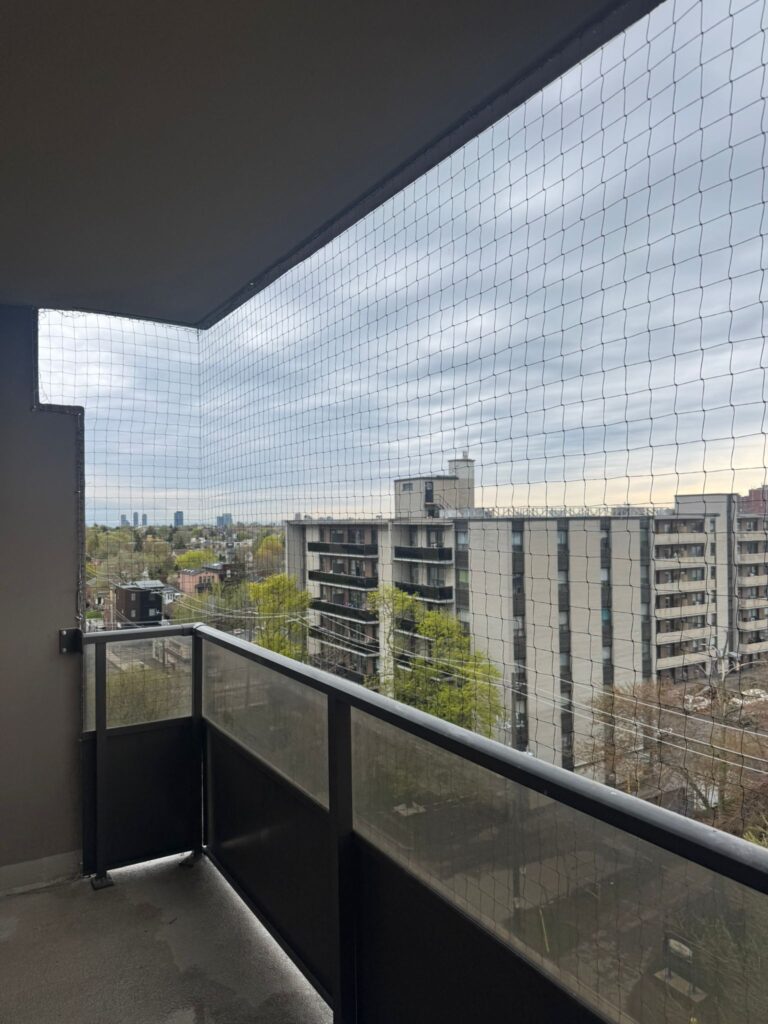
A bird flying toward a balcony encounters solid netting, realizes the barrier exists, and flies away. It doesn’t get stuck because the netting is properly tensioned and installed without gaps.
If a bird does touch the netting briefly, the soft material doesn’t cause injury. Professional installation prevents birds from getting their feet or wings caught because netting is positioned away from perching areas and maintained under proper tension.
The Humane Reality
Properly installed netting is actually one of the most humane bird control methods available.
Unlike trapping, poisoning, or other control methods, netting simply excludes birds without harming them. They’re not injured, not trapped, not suffering. They’re simply prevented from accessing an area and naturally relocate to more suitable habitats.
This approach satisfies Ontario’s wildlife protection requirements for humane treatment. Quality exclusion solutions are recommended by professional pest control companies as a first choice for responsible bird management.
What You Can Do to Ensure Safety
If you’re installing netting, take these precautions:
Hire professionals. DIY netting installation carries real risks. Professional installers have training, equipment, and knowledge to ensure safe, effective systems.
Use quality materials. Consumer-grade netting or fishing line creates hazards. Professional-grade materials are designed for bird safety and durability.
Verify proper installation. Before paying, inspect the work. Look for sagging areas, gaps, or loose fasteners. Properly installed netting should be tight with no movement.
Regular inspection. Check your netting monthly for damage, loosening, or degradation. Address problems immediately before they create safety issues.
Know what to avoid. Don’t use monofilament fishing line, plastic netting, or makeshift materials. These create entanglement hazards.
FAQ
What should I do if I find a bird caught in netting?
First, remain calm. Gently clear the area and avoid sudden movements that stress the bird. If possible, carefully and gently free the bird without causing further entanglement. If you can’t safely release it, contact a local wildlife rehabilitation center. Report the incident to whoever installed the netting so they can address the installation problem.
Is bird netting cruel?
No, properly installed netting is considered humane. It excludes birds without injuring them. They encounter the barrier, realize they can’t access the area, and relocate naturally. This aligns with Ontario’s requirements for humane wildlife control and is recommended by animal welfare organizations.
How often should I inspect installed netting?
Check monthly during active bird season and quarterly during slower periods. Look for tears, loose fasteners, sagging areas, or gaps that develop over time. Regular maintenance prevents safety issues and maintains effectiveness.
What’s the difference between professional and DIY netting?
Professional installations use materials engineered for bird safety with proper tensioning and gap-free coverage. DIY attempts often use inappropriate materials, improper fastening, and inadequate tension, creating entanglement hazards. The difference in safety is significant.
Concerned about bird safety with your netting solution? Contact Pigeon Control Toronto for professional installation that’s both effective and safe. We use quality materials and proven techniques that solve your bird problem without putting birds at risk. Get a free assessment today.